
Gurukulam
Nattika Life Gurukulam is an online Ayurveda certification course designed to help you understand the basics of Ayurveda and apply them in your daily life. The course is divided into two levels, each focusing on different aspects of Ayurveda.
Fast Learning
Quick and effective learning modules
Study at Convenience
Learn at your own pace
Unlimited Access
Lifetime course access
Certification
Get certified upon completion

Gurukulam Basic
116
Online Ayurveda certification, Level 1. 12 one-hour sessions with our expert team, completed within 3 months.
Valid for 3 months
Level 1 - Ayurveda Basics
12 One Hour Sessions with our Expert Ayurveda Team
Course Duration - 1 to 3 Months
Gurukulam Advanced
149
Online Ayurveda certification, Level 2. 12 one-hour sessions with our expert team, completed within 3 months.
Valid for 3 months
Level 2 - Advanced Ayurveda
12 One Hour Sessions with our Expert Ayurveda Team
Course Duration - 1 to 3 Months
Ayurveda Gurukulam Courses
Find one that works for you
Book Your Service

Loading days...
1 hr

Loading days...
1 hr

What is Gurukulam?
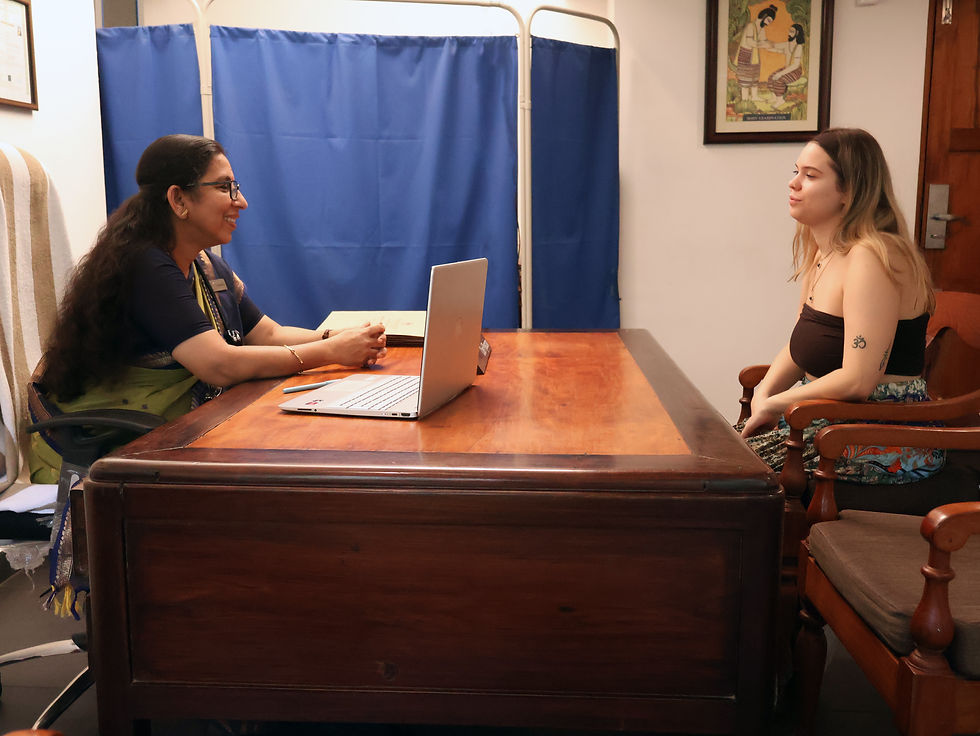
A gurukulam is the traditional Indian model of education - small groups of students (shishya) learning directly from a qualified teacher (guru), in a structured curriculum, over an extended period. It is how Ayurveda has been transmitted for over two thousand years, and how Kerala continues to teach it.
Modern online Ayurveda courses often replace the guru with recorded videos and quiz forms. That works for information transfer, less well for context, discretion and clinical judgement - the things that make Ayurveda usable. Nattika Gurukulam brings the traditional structure into a live online setting.
Small cohorts. Live sessions with our BAMS physicians. A structured curriculum from foundational concepts through Panchakarma. Question-and-answer time each week. Certificate on completion. What has been taught in Kerala for centuries, made accessible from wherever you are.
Level 1 - Ayurveda Basics
Duration: 3 Month (12 sessions – 1 sessions per week)
The Ayurveda Basic Course builds foundation in Basic Ayurveda concepts and terms, introduces Doshas, concepts related to five elements (Panchmahabhuta), Agni, Malas, body constitutions and other foundation concepts to build a good base for further studies.
Ayurveda
Introduction, Definition and Branches
Ayurveda Origin
The mythological origin of Ayurveda and its development through ages
Samhithas of Ayurveda
Introduction to the classical text books in Ayurveda
Concept of Panchamahaboothas
Five elemental principal
Concept of Thridosha
three fundamental energies or humors
Vatha
Functions, Type and properties
Pitha
Functions, Type and properties
Kapha
Functions, Type and properties
Dhathu & Mala
Concept of Body tissue and Waste formation
Agni and Ama
Concept of Digestive fine and its impairment
Prakruthi
Concept of Body nature
Prakruthi Analysis
Assessment to determine an individual's unique mind-body constitution
Level 2 - Advanced Certificate
Duration: 3 Month (12 sessions – 1 sessions per week)
This course helps you to understand intermediate to advanced concepts and procedures in Ayurveda like concept of disease and treatments, pathology of diseases, Application of daily regimen and seasonal regime in daily life based on Ayurveda principles, Ayurveda diet concept and its classification based on Doshas, details of Panchkarma metho
6 Tastes
Ayurveda Diet concept and the concept of Shadrasa
Concept of Guna
Properties of various elements
Dravya Guna-1
Properties of different herbs
Dravya Guna-2
Properties of different herbs
Dinacharya
Daily regimen practice explained in Ayurveda
Rithucharya
Seasonal regimen practice explained in Ayurveda
Ashtavidha Aahara Kalpana
Dietetic principles in Ayurveda
Adharaneya Vegas
In suppressive Vegas (Natural reflex)
Concept of Diseases
Understanding mental constitution and emotional balance
Treatments and their classification
Integration of yoga practices with Ayurvedic principles
Panchakarma
Poorvakarma & Nasya Karma
Panchakarma
Vamana, Virechana, Vasthi, Raktha Mokshana
Basic or Advanced - Which One Do You Start With?