
Dinacharya Kit Essentials: Your Complete Daily Ayurvedic Routine

Updated: Aug 20
Most of us roll out of bed, reach for our phones, and the day takes over before we've had a single moment for ourselves. Ayurveda has a different idea, it says the first hour of your morning shapes everything that follows. That's where Dinacharya comes in.
Dinacharya is the Sanskrit word for daily routine. It's a set of morning practices described in classical texts like the Ashtanga Hridayam, and it's been part of Ayurvedic living for over 3,000 years. The idea behind it is straightforward: when your daily habits move in rhythm with nature, your body and mind stay in better balance. A Dinacharya kit gives you everything you need to actually practice this, no guesswork, no hunting for separate products.
What Is Dinacharya and Why Should You Care?
Dinacharya is not a trend. It's not a 10-step influencer routine either. It's a clinically grounded system from classical Ayurveda that looks at the body's natural rhythms, specifically how the three doshas (Vata, Pitta, and Kapha) shift across different times of day and asks you to work with them instead of against them.
At Nattika Life's Ayurveda for Daily Life, we often say that Ayurveda isn't just medicine, it's a way of living. Dinacharya is the most practical way to actually bring that into an ordinary Tuesday morning.
What's Inside a Dinacharya Kit?
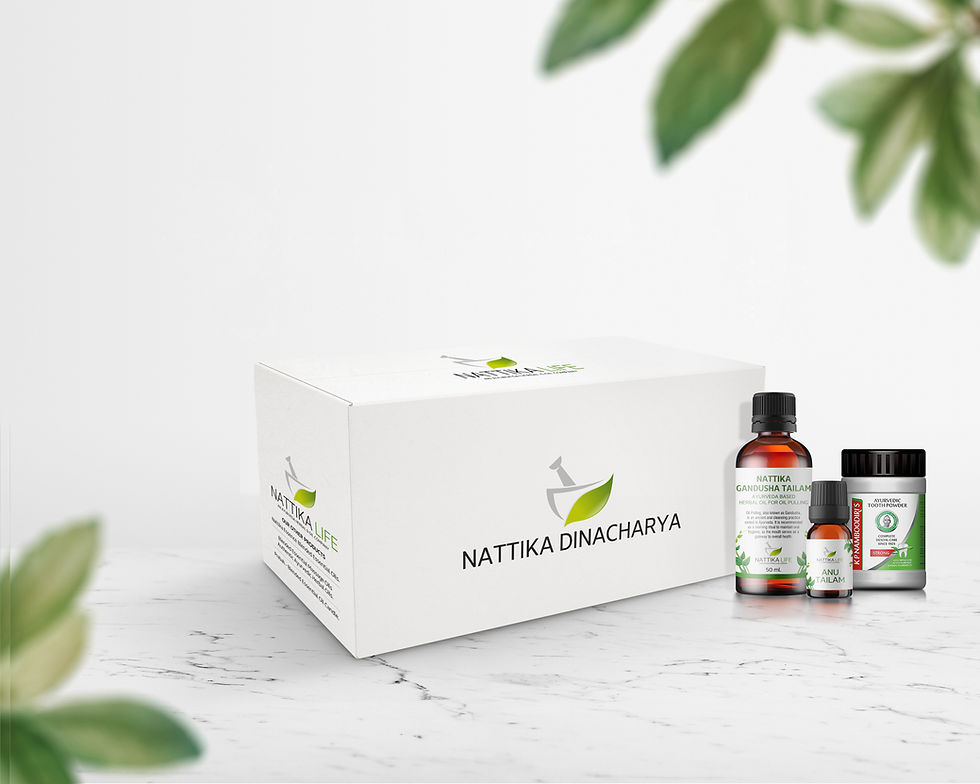
The Nattika Life Dinacharya Kit is put together by our Ayurvedic doctors and contains the key essentials for a proper daily routine. Here's what each item does and why it matters:
Danthadhavana Churna:
Upon waking in the early morning,the first step of your daily routine should be cleansing the oral cavity. Brush your teeth using a herbal powder with bitter, pungent and astringent properties. This practice helps cleanse the mouth and maintain dental hygiene.
Tongue Scraper
The body has been busy overnight, pushing out toxins (what Ayurveda calls Ama), and a coating forms on the tongue. Scraping it off is the next step in Dinacharya. It takes about 30 seconds and noticeably improves oral hygiene, breath, and even your sense of taste over time. Five to seven gentle strokes from back to front is all you need.
Anutaila - Nasya (Nasal Oil)
Nasya is the practice of putting 2 drops of medicated oil into each nostril. This one surprises most people the first time they hear about it, but it makes a real difference, especially for dry sinuses, morning brain fog, and stress headaches. The nose is the gateway to the brain in Ayurveda, and keeping the nasal passages clear and nourished has a direct effect on mental clarity. The Nattika Anutaila is prepared using 25+ traditional herbs and has been used at our retreats for years.
Gandusha Taila - Oil Pulling
Oil pulling, or Gandusha, means swishing a tablespoon of oil around your mouth for 3 to 5 minutes before brushing. Classical texts describe it as a practice that strengthens the jaw muscles, clears the throat, and supports oral health. Our Gandusha Taila is formulated specifically for this. It's not plain sesame oil, it's a prepared medicated blend that works more effectively for this purpose.
Step-by-Step: Your Morning Dinacharya
Here's a simple sequence to follow. You don't need to get all of it right on day one - just start and build up:
1. Wake up - Before 6 AM if possible, during Vata time when the mind is naturally clearer
2. Drink warm water - A glass of warm (not hot) water before anything else
3. Tooth Brushing - Brushing your teeth with herbal powder with bitter, pungent and astringent taste.
4. Scrape your tongue - 5 to 7 gentle strokes
5. Oil pulling (Gandusha) - 1 tablespoon of Gandusha Taila, swish for 3 to 5 minutes, then spit out
6. Nasya - 2 drops of Anu Taila in each nostril, lie back for a minute
7. Abhyanga - Warm oil massage for 10 to 15 minutes before your bath
8. Movement or Yoga - Even 20 minutes makes a difference. Our daily online yoga sessions are designed specifically to fit into a morning practice like this.
Adjusting Dinacharya for Your Dosha
Ayurveda doesn't give everyone the same prescription. If you're predominantly Vata, warm and grounding oils work best for Abhyanga, and extra attention to Nasya helps keep anxiety and dryness in check. Pitta types often do better with cooling herbs and slightly less stimulating practices in the morning. Kapha types benefit from invigorating, energising routines to shake off morning heaviness.
If you're not sure about your dosha or how to adjust the routine to your constitution, an Ayurveda consultation with one of our doctors is the most reliable way to get a personalised plan. You can also explore our dosha-based essential oil blends - Vata, Pitta, and Kapha formulations are all available.
Start Small and Stay Consistent
When people first read about Dinacharya, the most common reaction is: "I don't have time for all of this." That's a fair point. But here's the thing, you don't need to do it all from day one. Start with tongue scraping and Gandusha. That's five minutes. Add Nasya the following week. The full routine becomes second nature once the first few steps are already a habit.
Consistency matters far more than completeness. A 15-minute Dinacharya done every day will do more for your wellbeing than an hour-long perfect routine done three times a month. If you want to understand the deeper philosophy behind all of this, the Nattika Life Journal has detailed articles on each practice written by our Ayurvedic physicians.
Frequently Asked Questions
Q1. What is included in a Dinacharya kit?
A Dinacharya kit typically includes a Tongue scraper, Danthadhavana Churna, Gandusha Taila for oil pulling and Anutaila (nasya/nasal oil) for nasal cleansing. The Nattika Life Dinacharya Kit contains classical Ayurvedic formulations prepared and quality-checked by Ayurvedic physicians from Nattika Ayurveda Retreats in Kerala.
Q2. How long does a Dinacharya routine take each morning?
A complete Dinacharya routine with all steps takes around 45 to 60 minutes. A shorter version covering tongue scraping, oil pulling, and nasya can be completed in 15 to 20 minutes and is a practical starting point for beginners or those with busy schedules.
Q3. Can I follow a Dinacharya routine without knowing my dosha?
Yes, a basic Dinacharya routine is suitable for most people regardless of body type. However, for better, more specific results, knowing your Vata, Pitta, or Kapha constitution helps you choose the right oils and adjust the intensity of each practice. An Ayurveda consultation with a qualified doctor makes this personalisation easy.
Q4. Is oil pulling safe to do daily? What oil should I use?
Daily oil pulling with a properly formulated Gandusha Taila is safe and recommended in classical Ayurvedic texts. Use about 1 tablespoon, swish gently for 3 to 5 minutes, and spit it out, never swallow. A medicated Ayurvedic formulation is more effective than plain sesame or coconut oil for this purpose.
Q5. Where can I buy an authentic Dinacharya kit in India or internationally?
You can order the Nattika Life Dinacharya Kit directly at nattikalife.com. It is available for delivery across India and internationally. Each product in the kit is formulated by Ayurvedic physicians from Nattika Ayurveda Retreats in Thrissur Kerala, one of South India's most established Ayurvedic retreat centres.
By Dr Anupriya


Comments